Orientation lighting for venues and audience areas.
Which steps or edges need to remain visible when the room is dimmed? Choose your type of space and see what matters for lighting effect, installation and operation before selecting the actual product.
Where do you need orientation?
Choose the relevant application. Each specialist page explains suitable solutions, installation considerations and typical project requirements.
What is different about your space?
Lighting effect, construction and operation vary considerably depending on the type of venue. The examples below show the most common applications and lead directly to the relevant specialist pages.
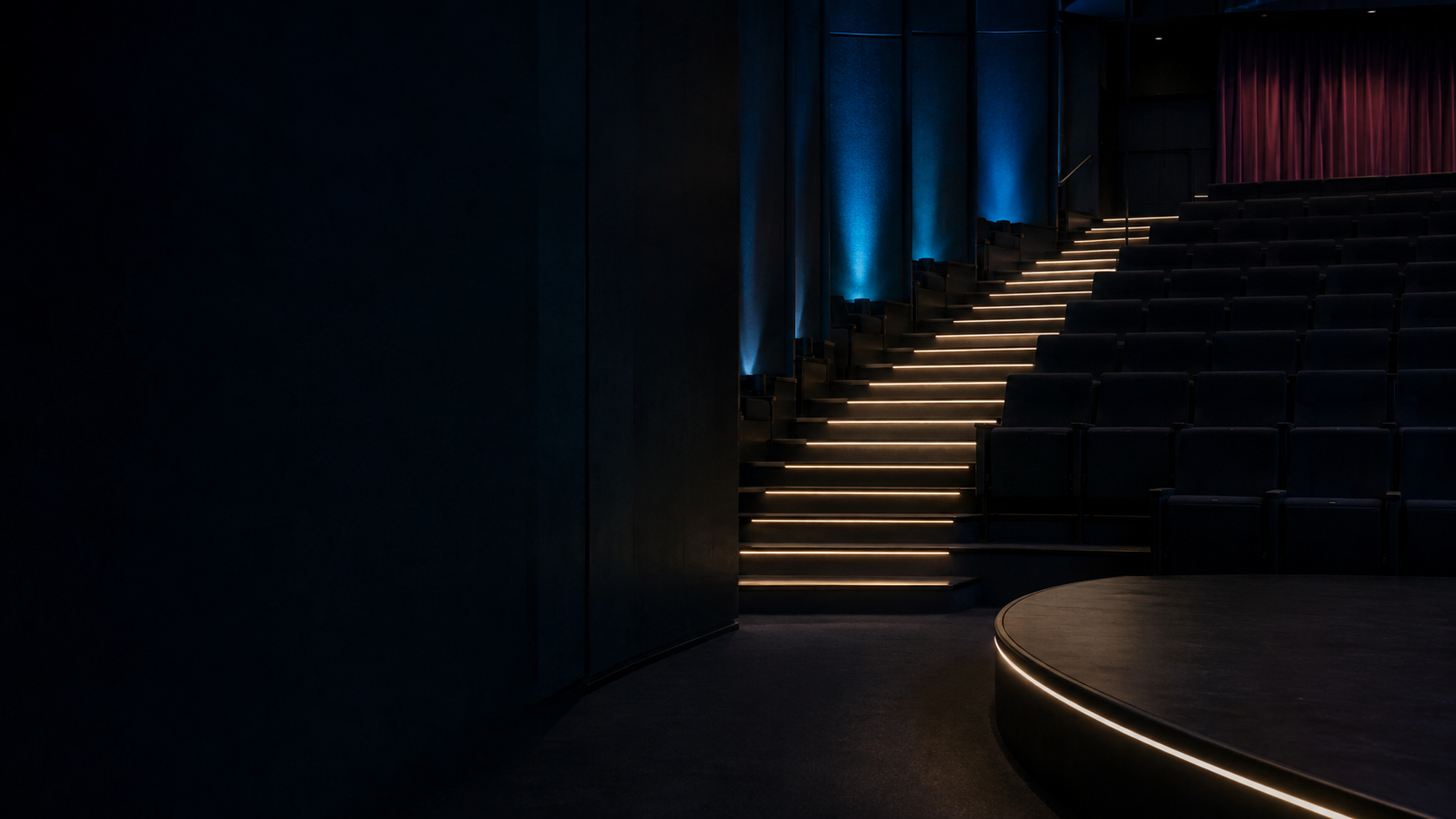
 Theatres & opera
Keep the steps visible while the stage remains the focus.
Step edges must remain recognisable even at very low lighting levels without adding unwanted brightness to the auditorium or affecting the stage atmosphere.
 Cinemas & IMAX
Guide visitors without disturbing the screening.
Cinema lighting needs carefully controlled brightness, clear visual guidance and reliable operation while keeping the screen and viewing experience free from unnecessary light.
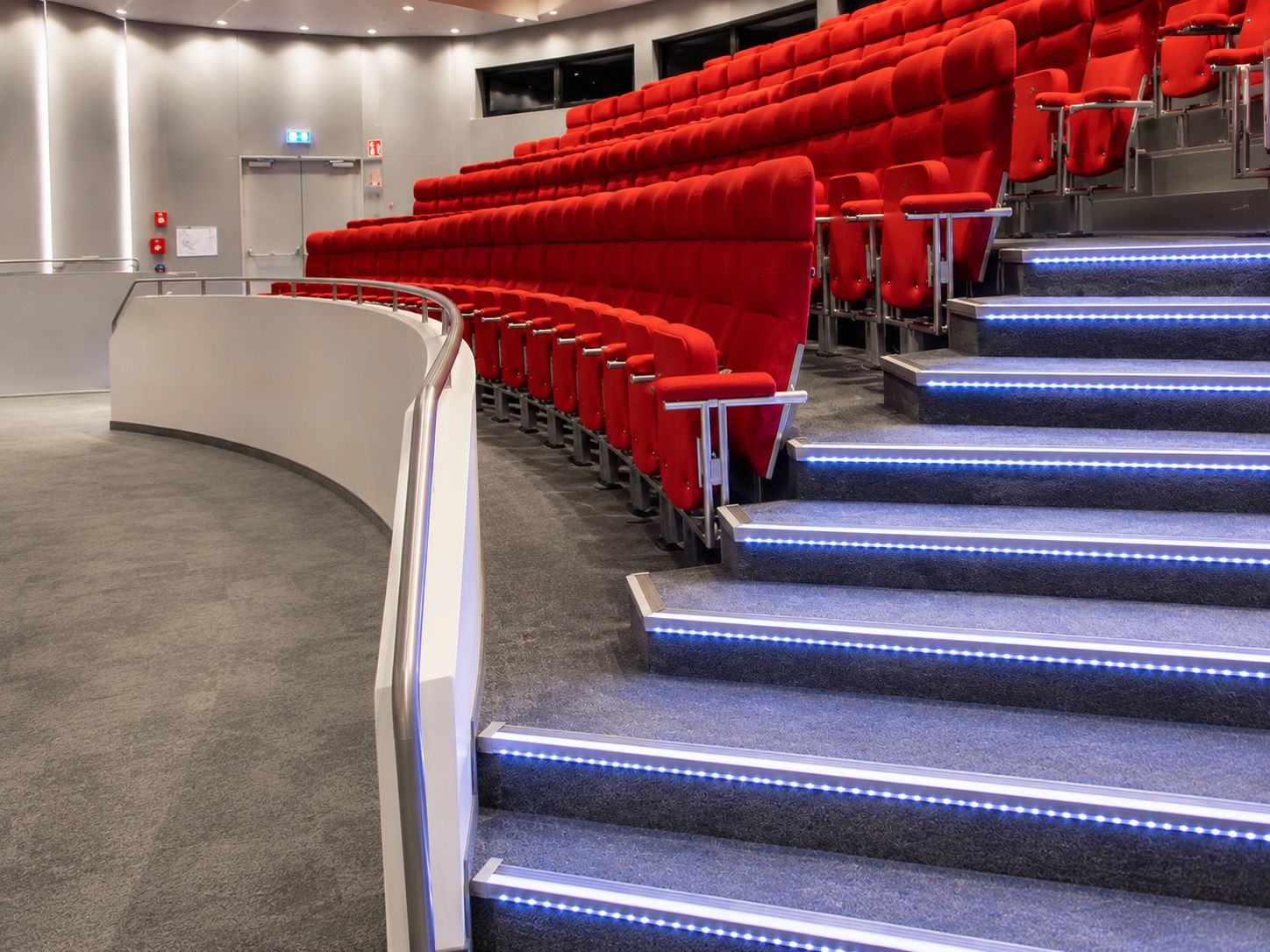 Auditorium
Orientation during lectures and projection.
Low-glare solutions for lecture halls, universities, presentation spaces and refurbishment projects.
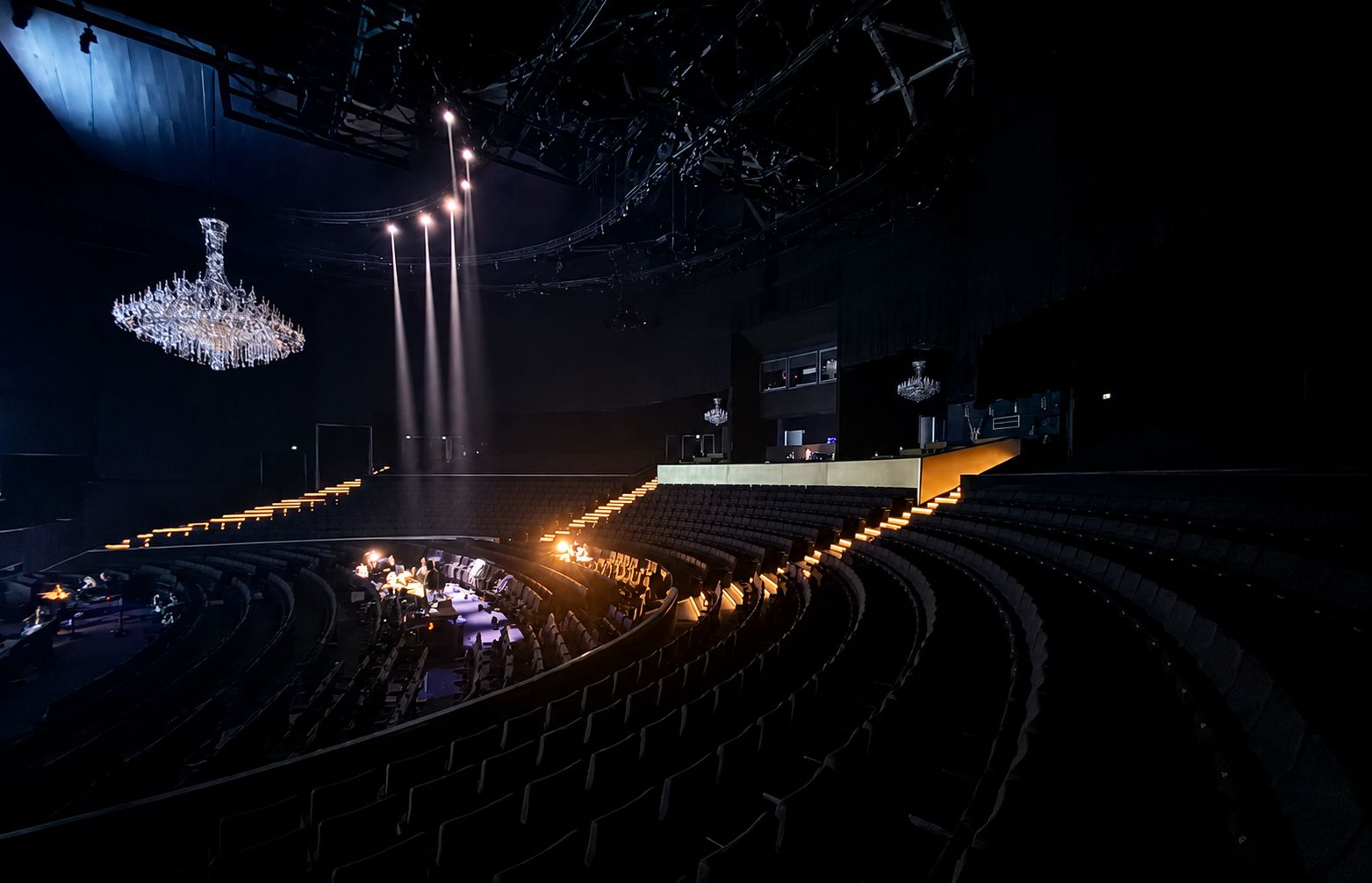
 Event venue
Flexible spaces require flexible lighting.
Suitable for stalls, platforms, aisles, changing seating layouts and different event formats.
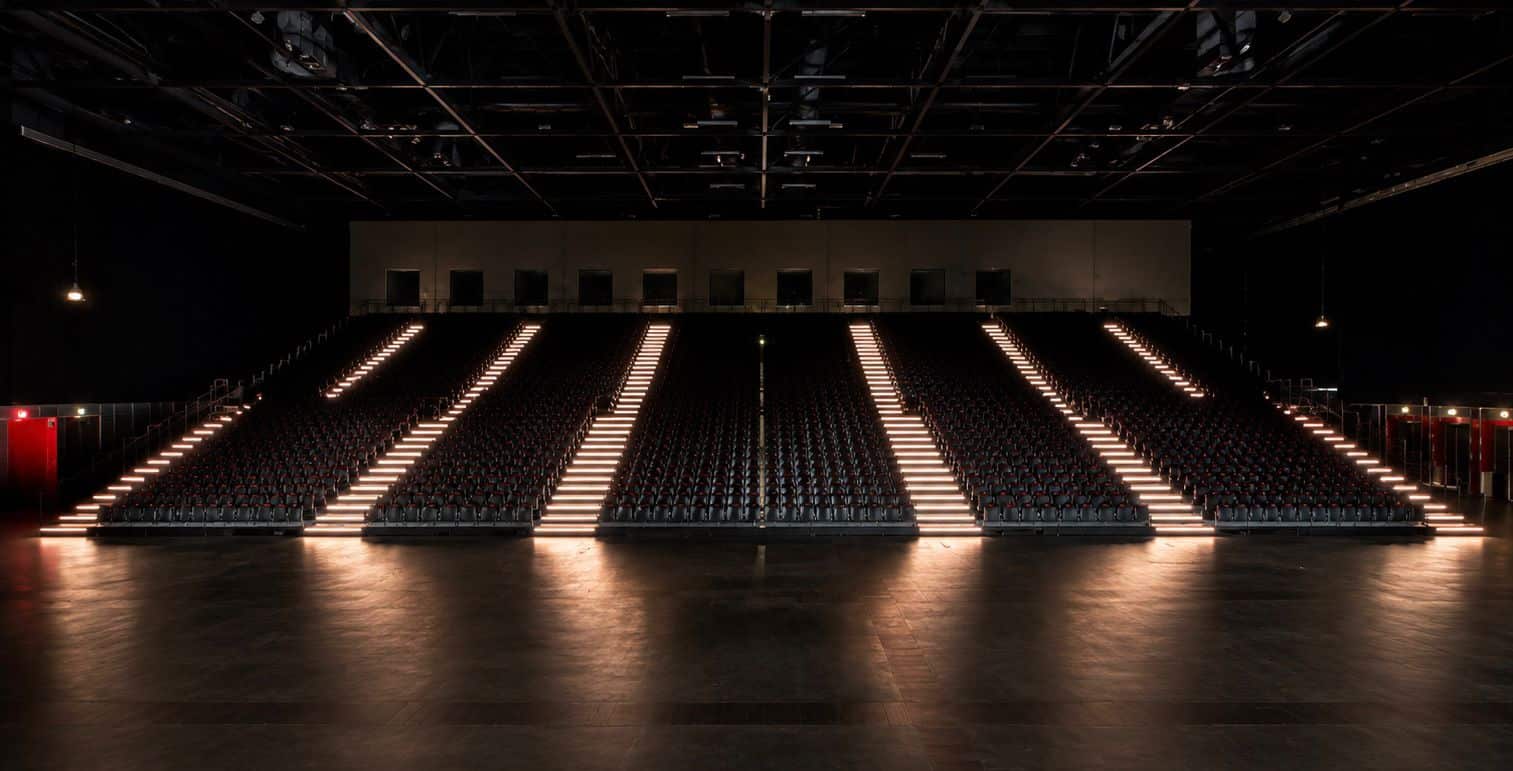 Grandstands
Fixed, mobile or retractable.
Step lighting for seating structures with suitable profiles, cable routing and technical integration.
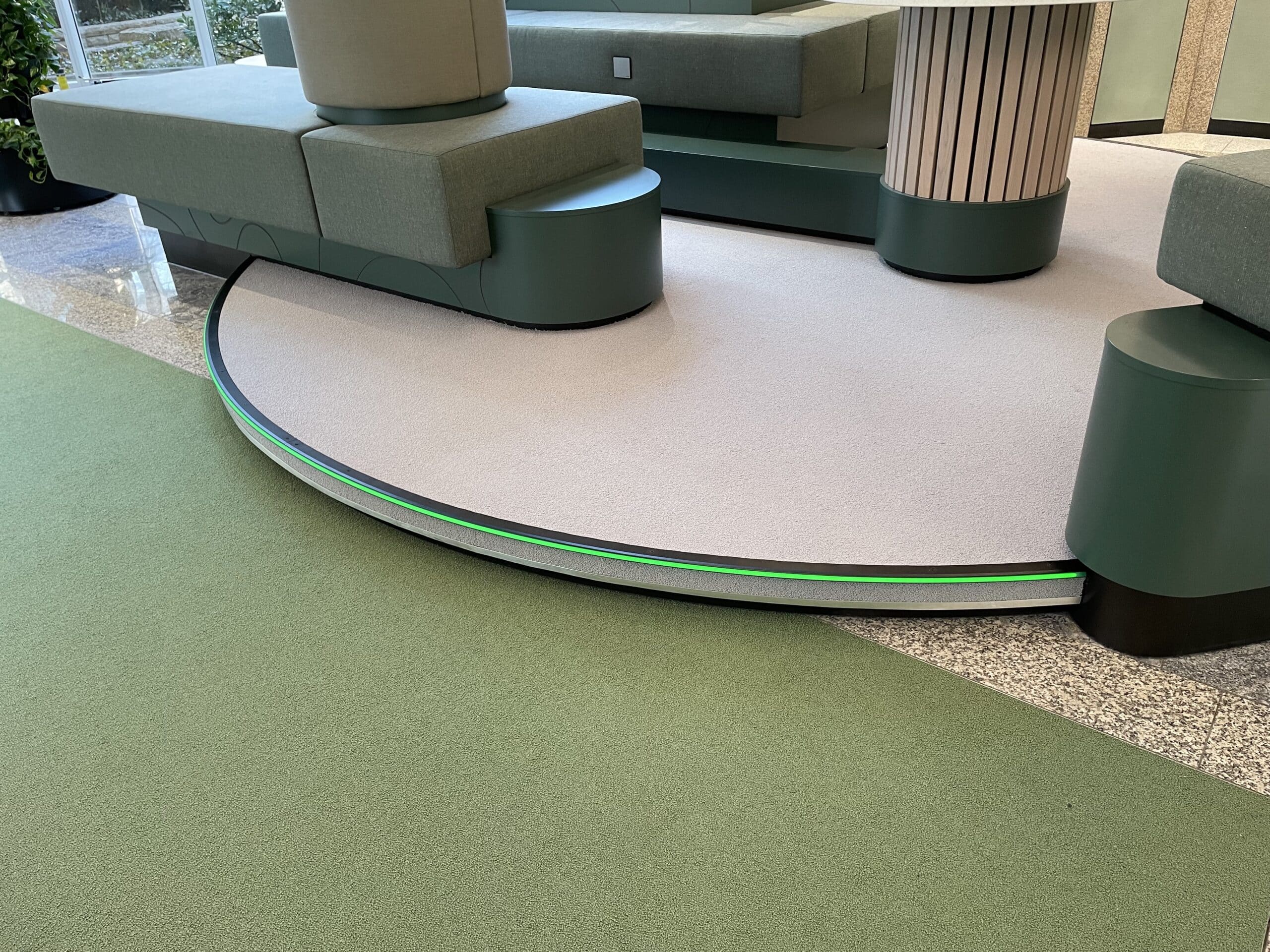 Public buildings
Robust, maintainable and easy to understand.
For foyers, circulation areas, platforms and other heavily used public interiors.
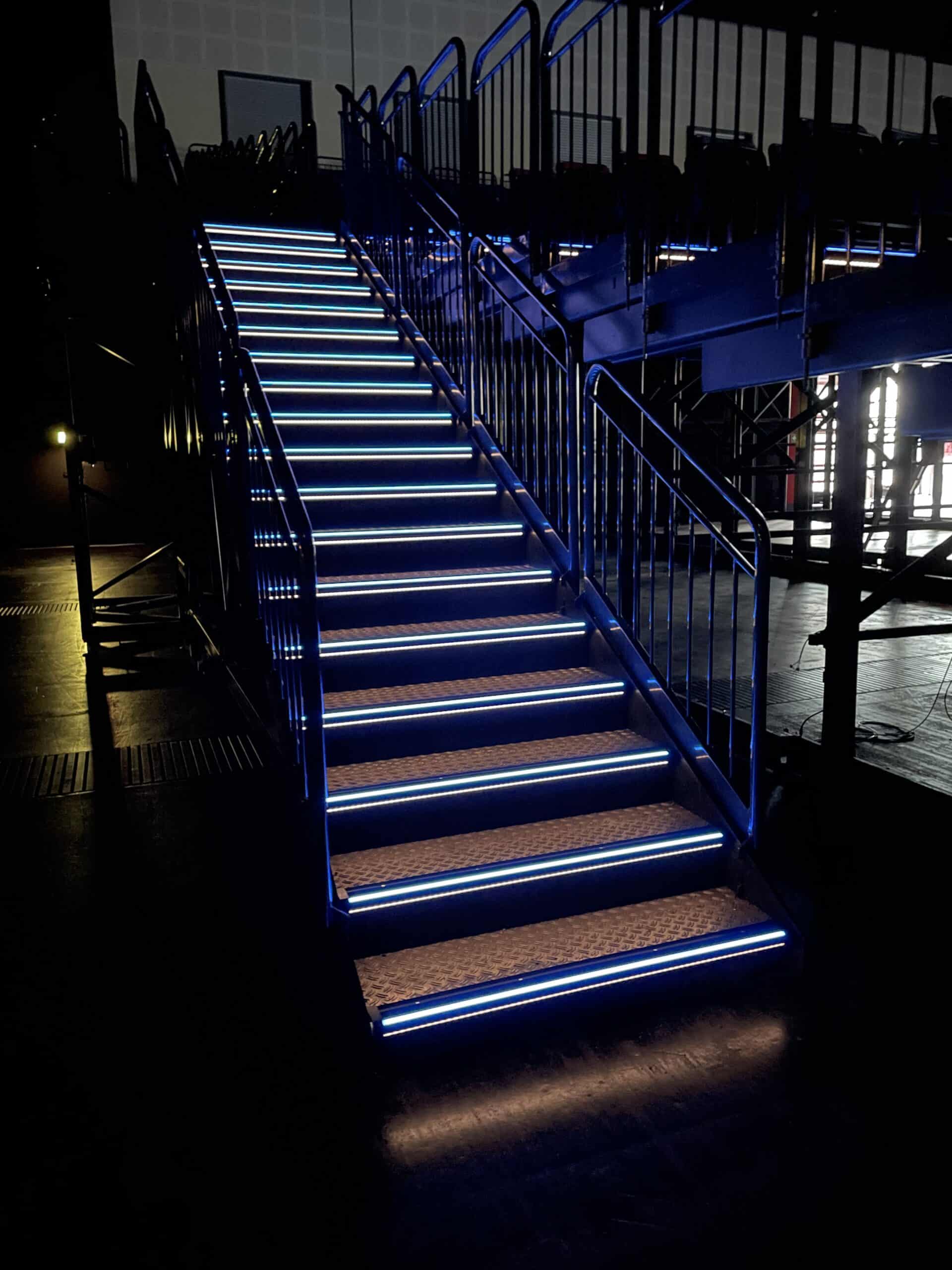
Plug-in by design. Quick to assemble. Reliable in operation.
When grandstands, platforms or additional steps are regularly assembled, separated or moved, the lighting requires defined plug-in connections, prepared cable runs and a repeatable system structure.
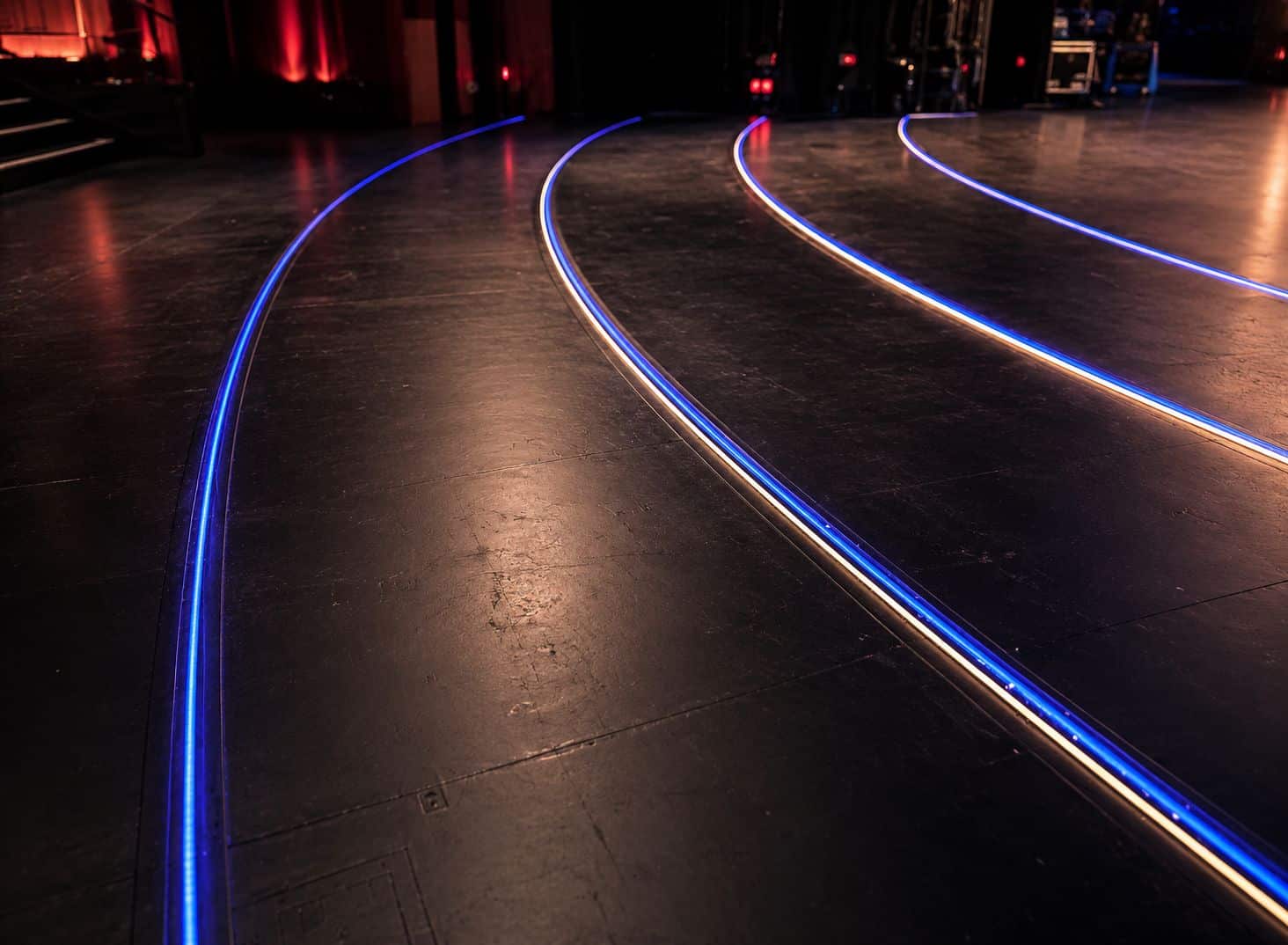
Make edges visible without disturbing the production.
Stage, platform and changes in level can be marked with a clearly defined, low-glare light line for rehearsals, performances, changeovers and operation in darkened spaces.
A photo or drawing is enough to start.
You do not need to select a profile or control system in advance. We review the space, step geometry, required lighting effect and known interfaces and recommend the appropriate next step.
No completed specification or product selection is required. We clarify missing information with you.
Space identified. How does it become a system?
Installation and lighting effect determine the luminaire. Cable lengths, power supply, dimming and requirements such as DMX, DALI or backup operation determine the overall system.
Three projects. Three different requirements.
Recessed lighting in a theatre, cinema refurbishment and a mobile grandstand demonstrate why step lighting should be planned as part of the complete application rather than as an isolated product.
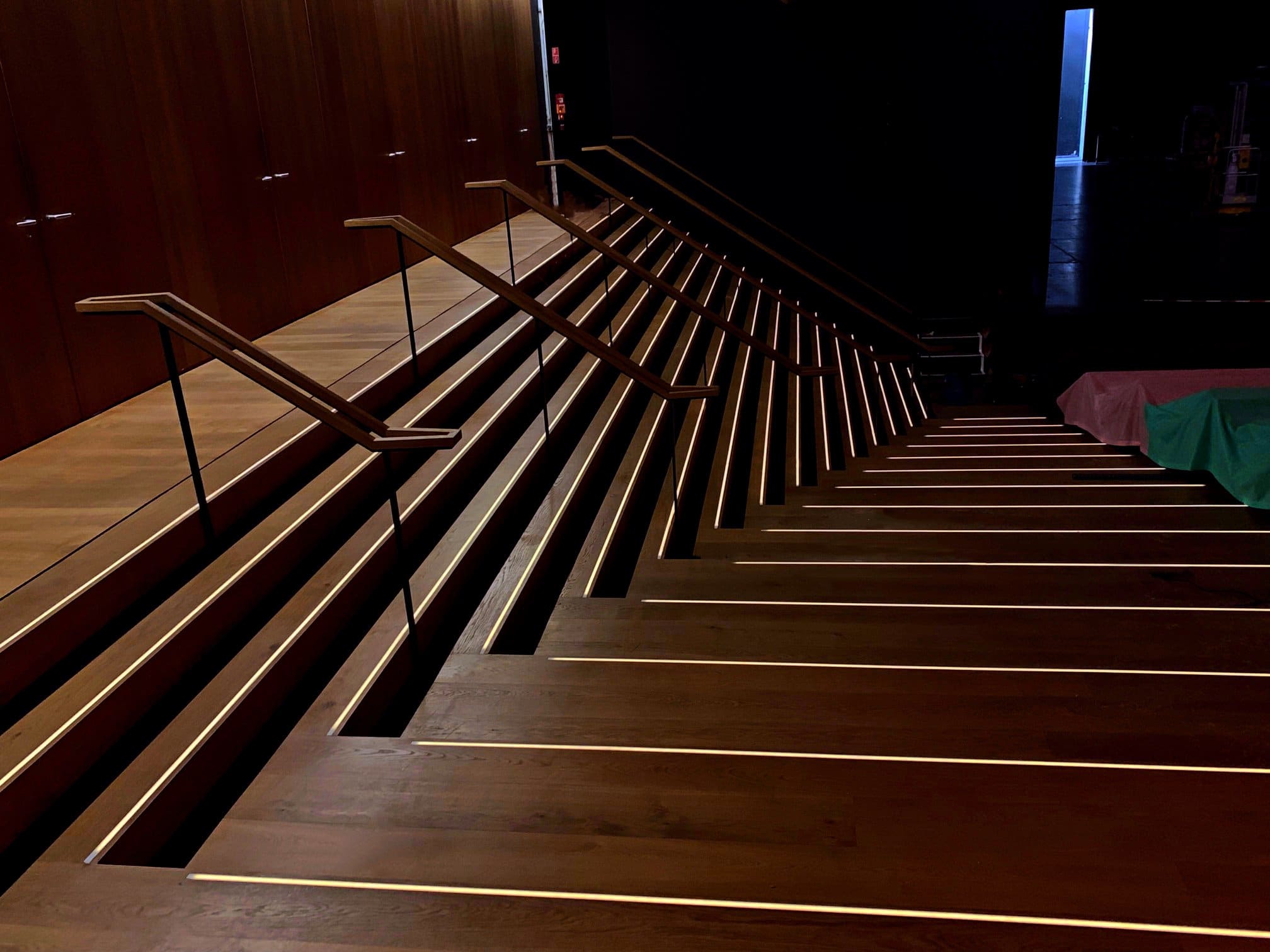
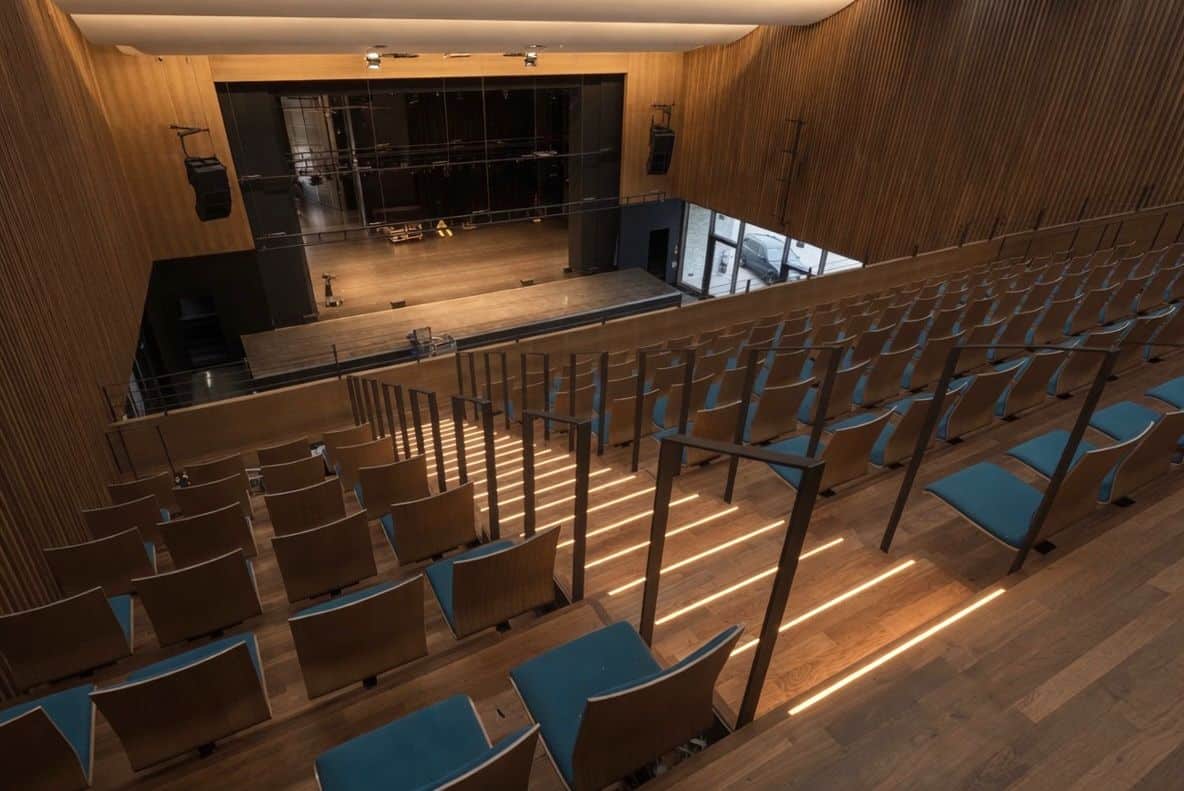
Theater Heidelberg
Flush integrated light lines within timber steps for a discreet and high-quality appearance in the auditorium.
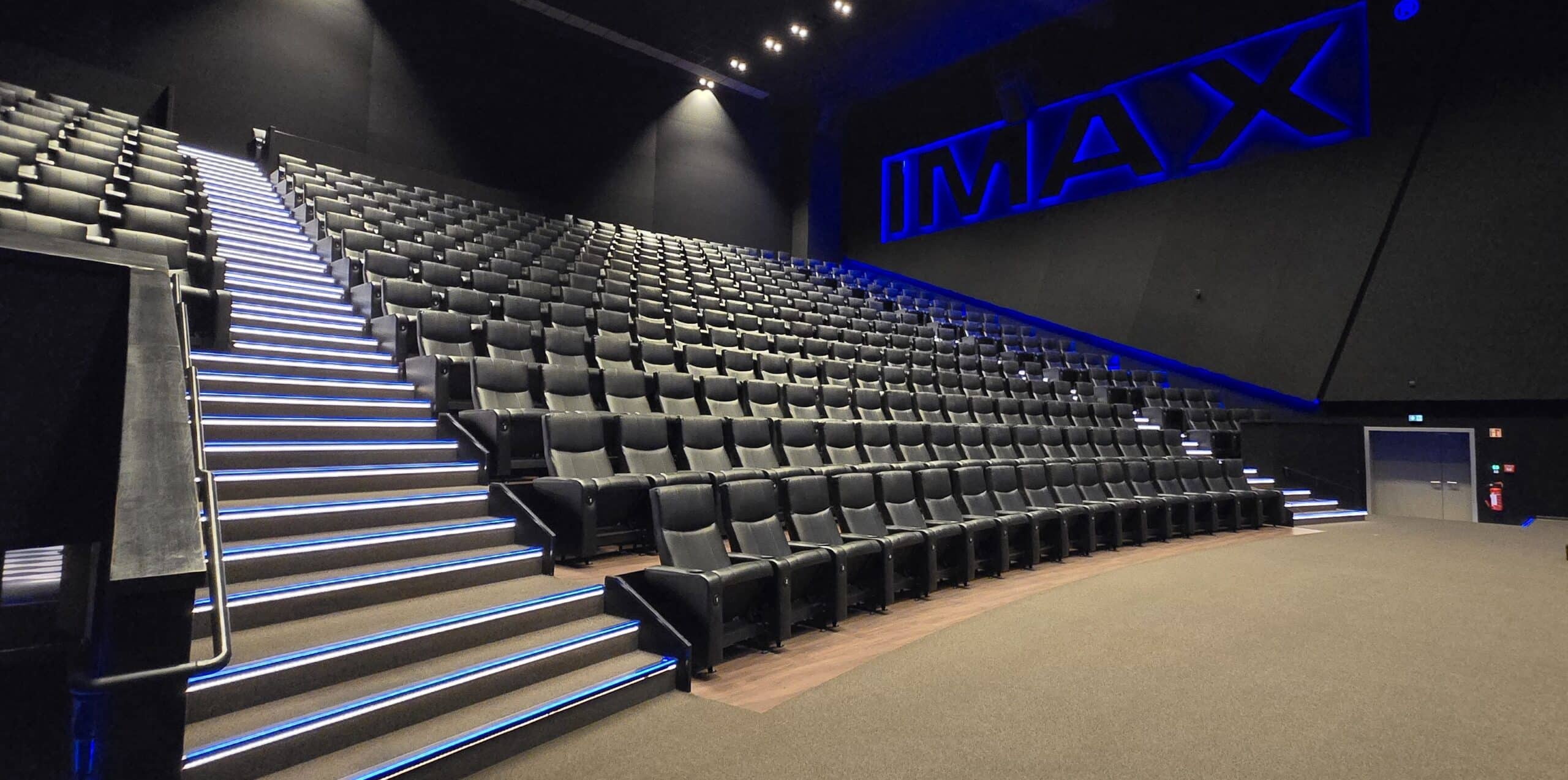
UCI East Side Gallery Berlin
Blue and white step lighting coordinated with auditorium design, visitor guidance and cinema operation.
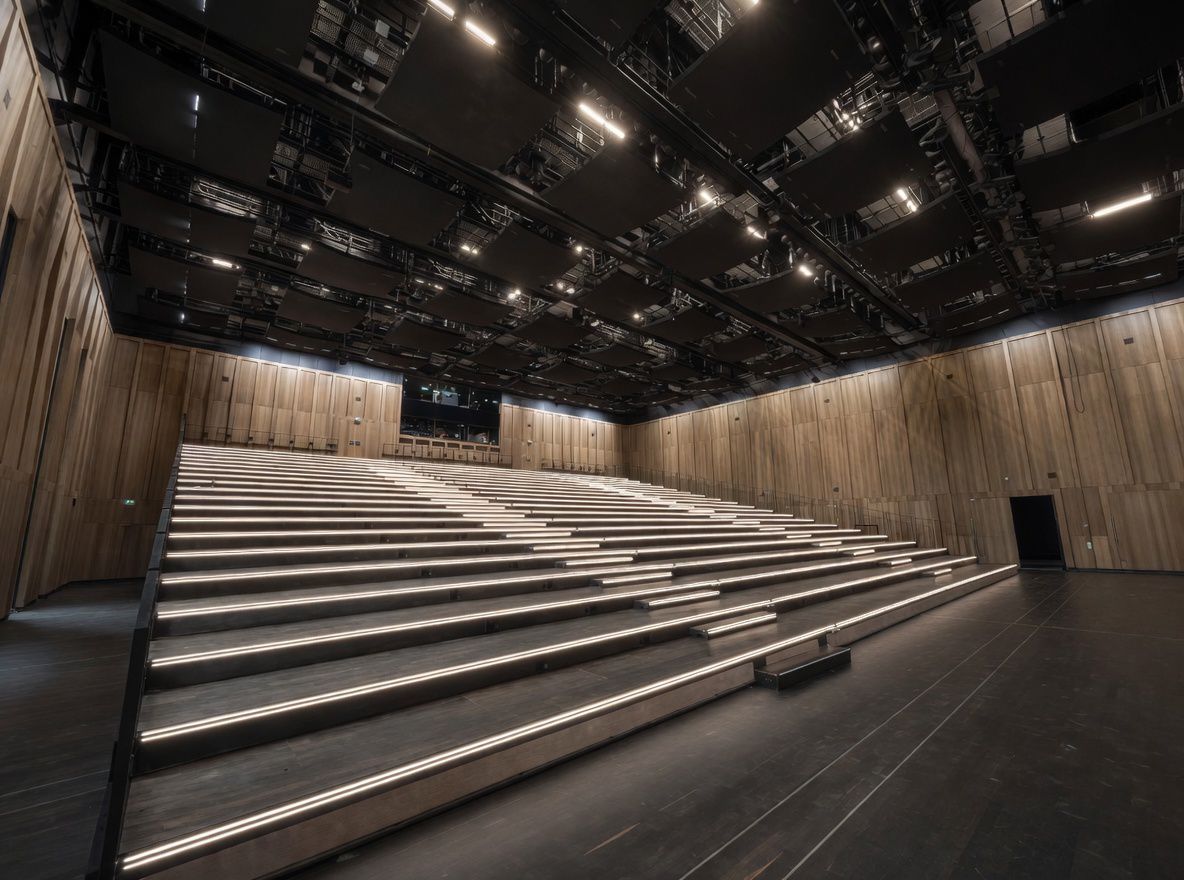
VILCO Bad Vilbel
Robust LED step profiles for a mobile grandstand with project-specific connections and movement requirements.
200+ projects & supply contracts: Our references include theatres, cinemas, auditoriums, event venues, fixed and mobile grandstands and public buildings.
View projects →Which step lighting suits which application?
Key distinctions for selecting the right approach for your space and project.
What does orientation lighting mean in venues?
Do I need an LED step profile or recessed lighting?
When is a portable plug-in system required?
When is separate stage edge lighting useful?
Can the systems be integrated with DMX or DALI?
Is backup operation possible?
Can existing theatres, cinemas or auditoriums be refurbished?
What information do you need for an initial assessment?
Know the space? Send us a photo or drawing.
We review the installation situation, lighting requirements and interfaces and provide a clear recommendation or the basis for samples, site measurement and quotation.