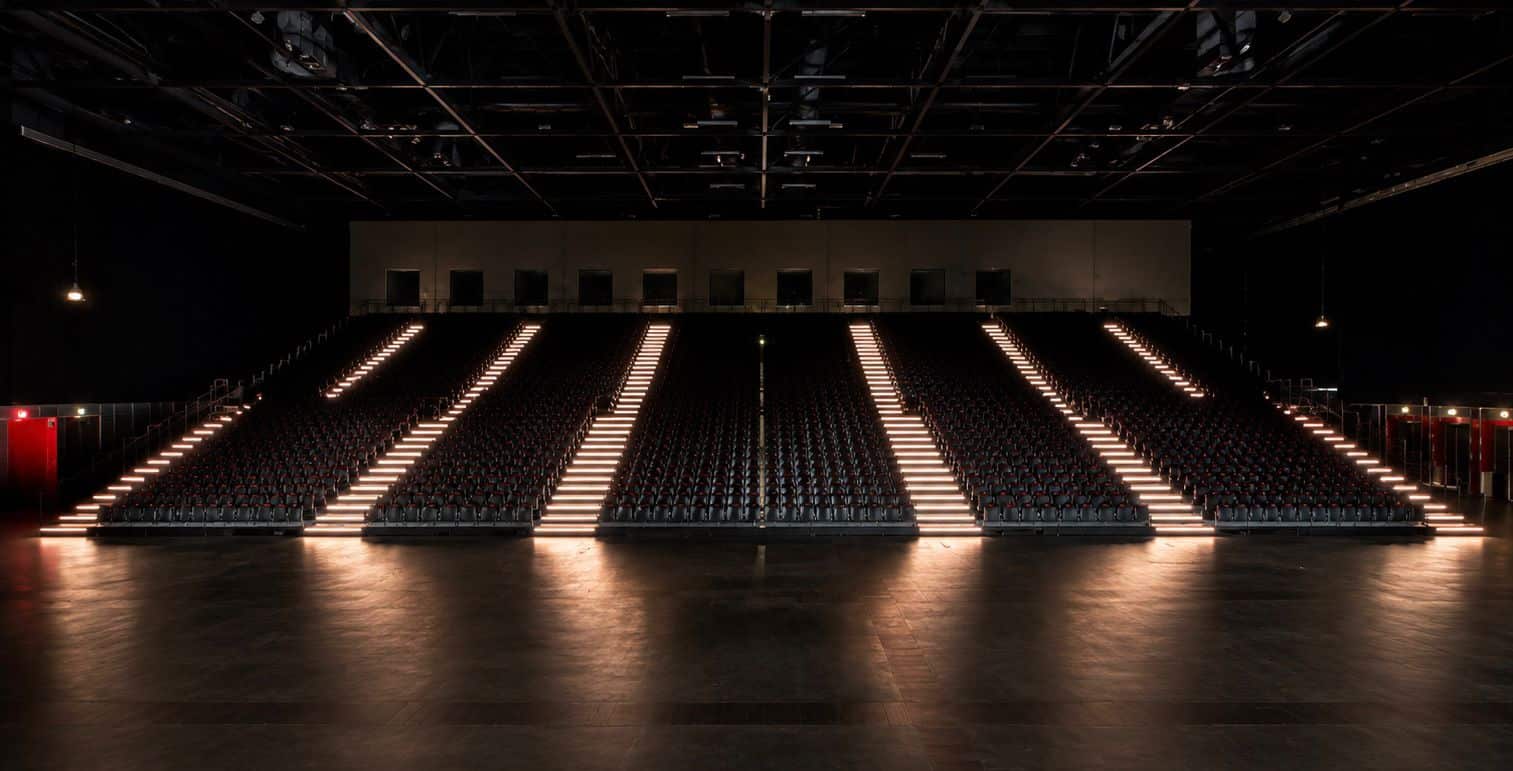
LED step lighting for grandstands & retractable seating.
Project-specific LED lighting for audience stairs, access aisles and seating structures – from permanently installed grandstands to mobile and retractable seating systems.
Profiles, light effect, cable routing, power, dimming and control are coordinated around the actual seating construction and its operating sequence.
For moving structures, the cable and connection concept is planned together with the lighting.
A fixed grandstand has different requirements from a moving one.
For permanent audience seating, the main issues are light effect, robust fixing and clean integration. Mobile or retractable systems additionally require the electrical installation to accommodate movement, separation points and future maintenance access.
Permanently integrated
LED step profiles or recessed luminaires for audience aisles, rows and permanently constructed seating areas.
Design around the movement
Luminaires, cables and connections are coordinated with travel paths, folding sections, separation points and the seating mechanism.
Match the project stage
Surface-mounted profiles, recessed systems and electrical infrastructure are selected according to the existing structure and level of project development.
Geometry, use and mechanical construction define the system.
For every grandstand
- record stair widths, access aisles and seating rows
- coordinate light output and viewing angles
- select a profile or recessed light to suit the structure
- define cable routes, feed points and service access
- consider dimming, controls and backup operation early
The electrical system must follow the mechanics.
If the grandstand moves, folds or retracts, cables and connections need to move in a controlled way or separate at defined interfaces.
- travel path and moving sections
- strain relief and mechanical cable protection
- plug-in or removable connections
- energy chains where appropriate
- accessible power and control technology
Which system fits the actual step construction?
The correct solution depends on the step, surface material, lighting effect and technical infrastructure.
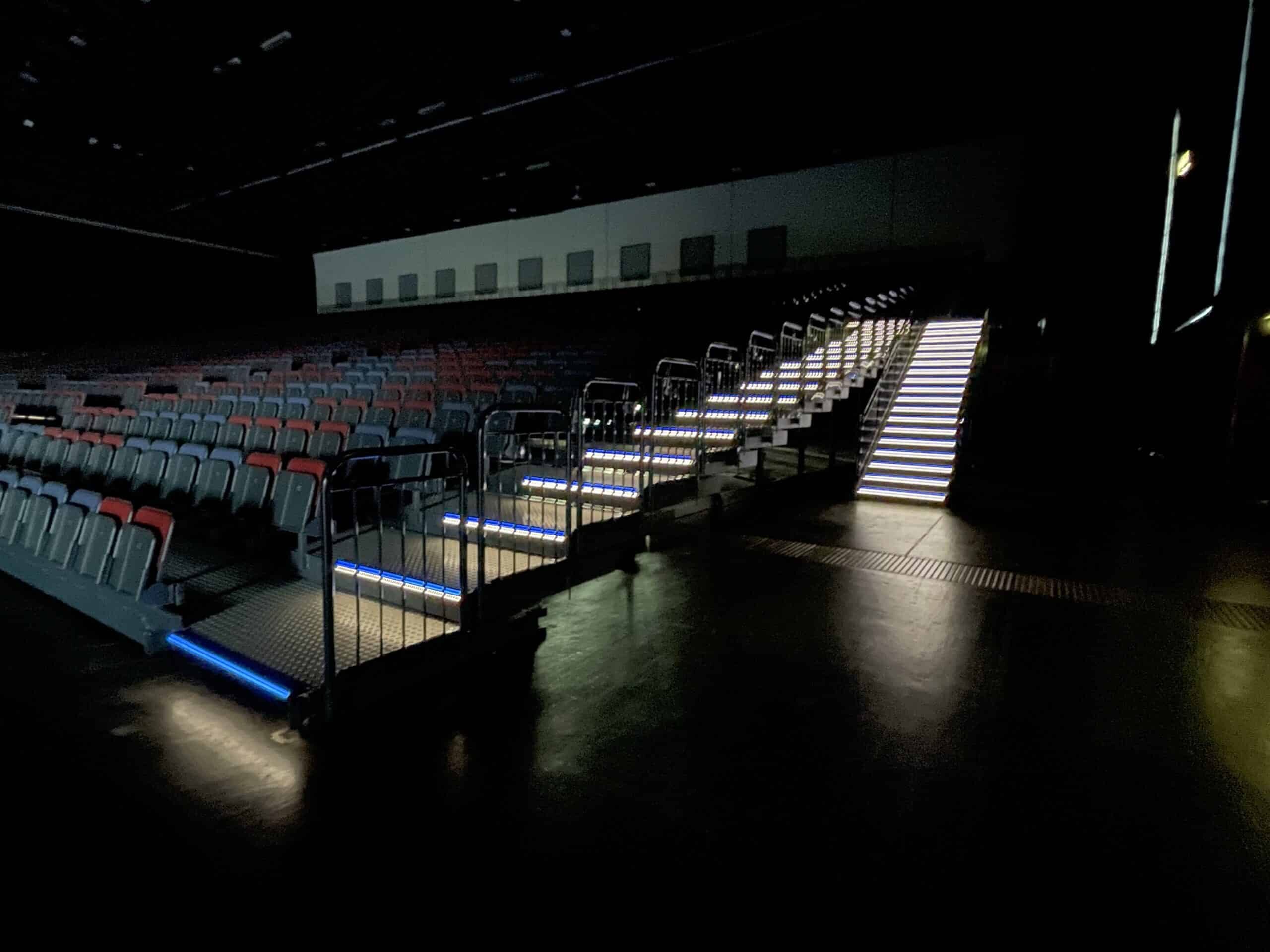
Robust illuminated step edges
For fixed and moving grandstand stairs. Profile geometry, fixing and light direction are selected around the actual step edge.
Compare LED step profiles →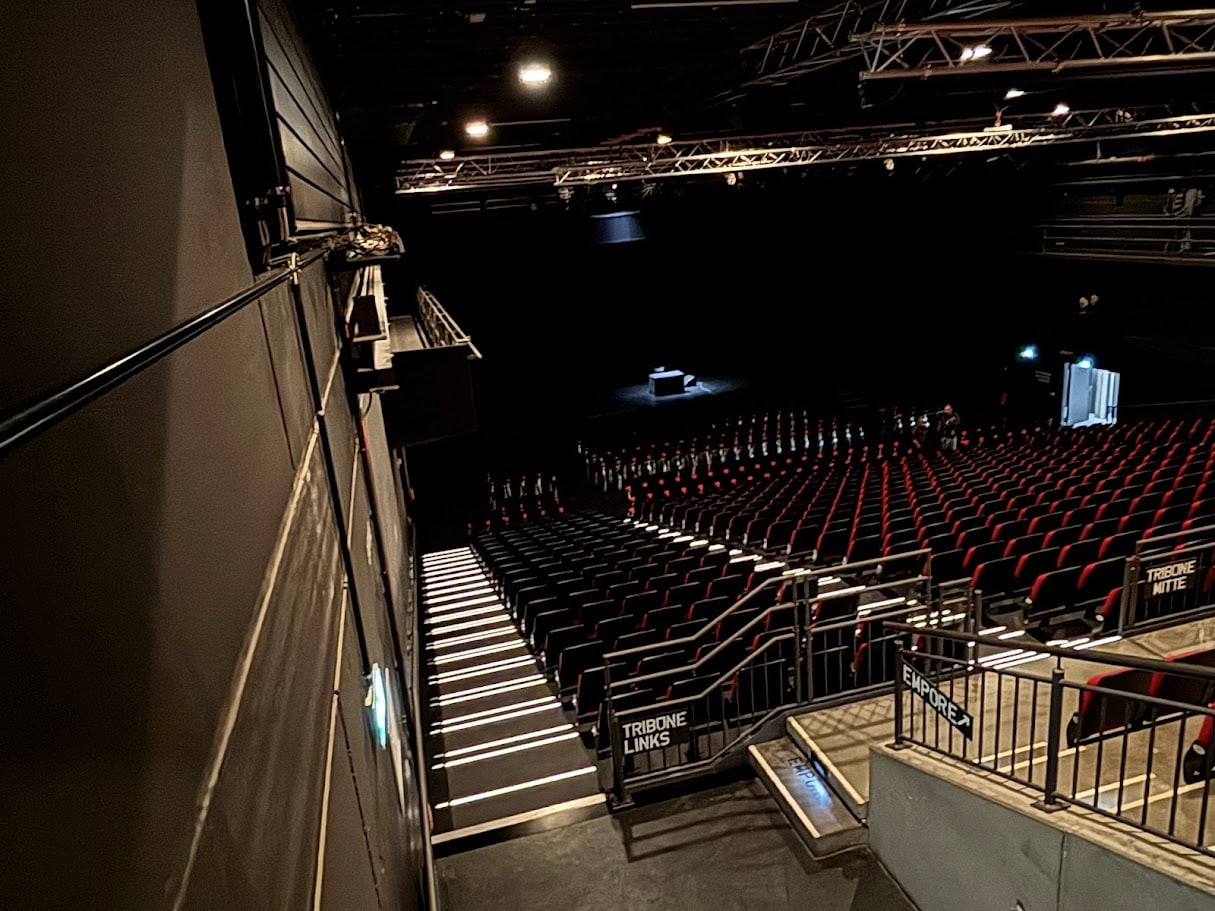
Flush integration into timber and special structures
For prepared steps and architectural details where a discreet flush light line is preferred over a surface-mounted profile.
View recessed step lighting →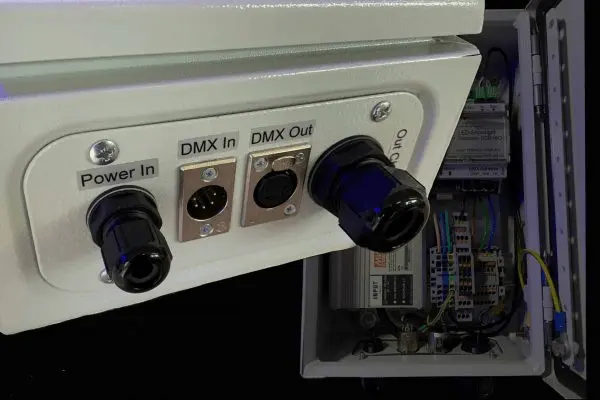
Define dimming and operating states
24 V power supplies, dimmers, DMX, DALI and project-specific control technology can be coordinated with the size and use of the seating system.
View controls & power →Match the lighting concept to the type of seating structure.
| Seating type | Typical approach | Key design issue |
|---|---|---|
| Fixed grandstand | LED step profiles or flush recessed luminaires | Controlled orientation lighting, robust fixing and clean integration into stairs and aisles. |
| Mobile grandstand | Segmented lighting with defined connection points | Travel path, strain relief, separation points and accessible electrical connections. |
| Retractable seating | Controlled moving cable routes and coordinated connections | Prevent crushing, abrasion and uncontrolled cable movement throughout every extended and retracted position. |
| Special construction | Project-specific combination of profiles, recessed luminaires and controls | Early coordination with the seating-system manufacturer, electrical design team and operator. |
Permanent seating requires robust integration and controlled light.
Keep audience aisles clearly recognisable
Step lighting should guide visitors through aisles and seating rows without becoming unnecessarily dominant when the general lighting is reduced.
- select the profile around the step edge and floor finish
- control brightness and direct glare
- use robust fixing for long-term operation
Structure power and cabling for maintenance
Feed points, circuits, power supplies and controls should be arranged so the installation remains understandable and serviceable throughout its operating life.
- divide 24 V circuits according to the project
- account for cable length and voltage drop
- retain access to power and control equipment
A moving grandstand needs more than a suitable LED profile.
Cable harnesses, plug connections, transfer points, energy chains and removable system technology need to match the actual movement or assembly sequence.
These interfaces are developed around the mechanical seating system rather than added afterwards.
- prepared and labelled cable harnesses
- defined plug-in and transfer points
- strain relief and mechanical cable protection
- energy chains for controlled movement where required
- removable power-supply and dimmer assemblies
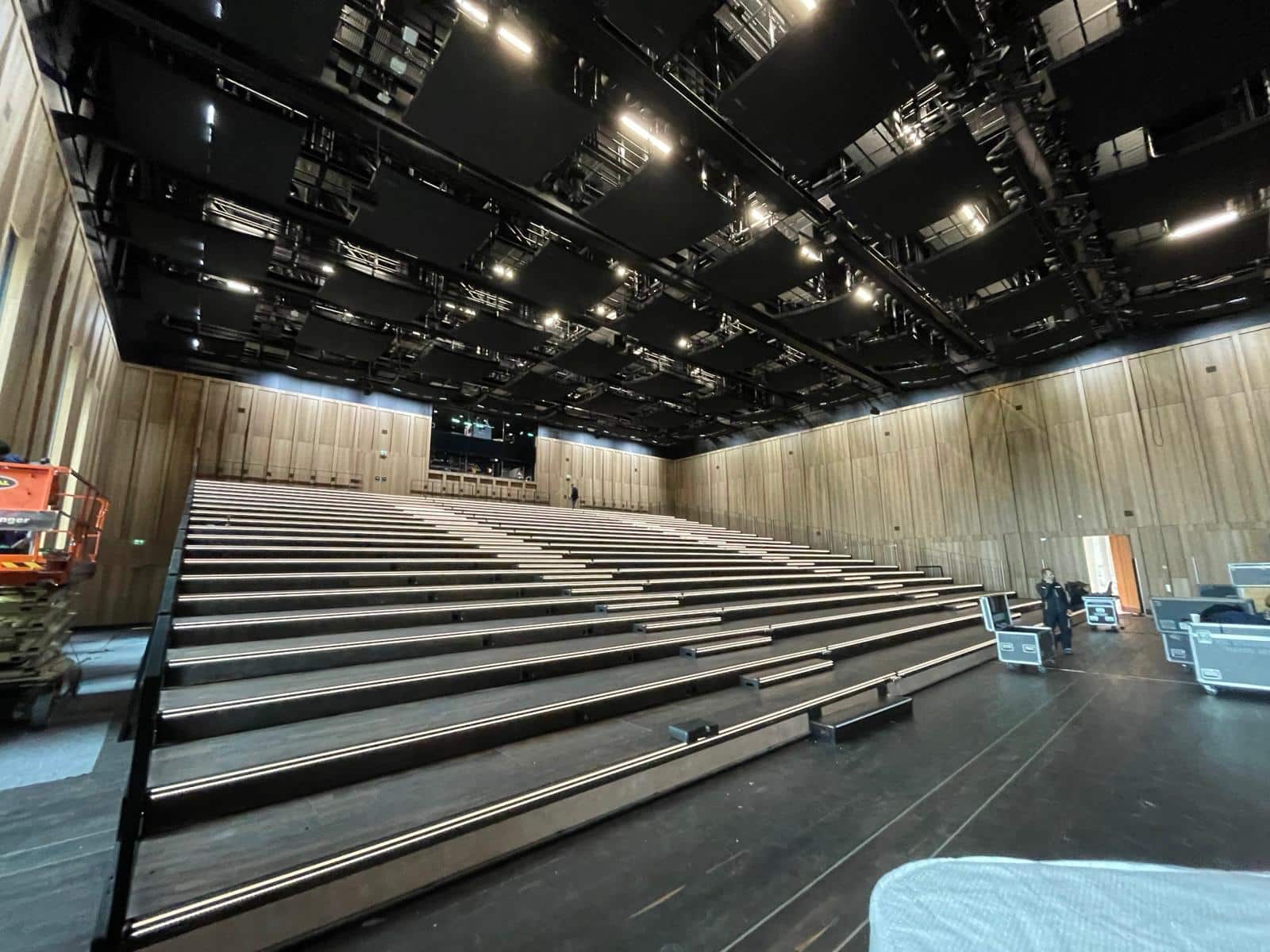
Treat grandstand lighting as a coordinated electrical system.
Selected according to step construction, floor finish and required light effect.
Loads, feed points and cable lengths are coordinated with the selected lighting system.
Lighting zones and operating states can be integrated with the venue's control concept.
Available backup supplies or dedicated system technology can be considered according to project requirements.
If the step lighting is intended to form part of regulated emergency or safety lighting, the applicable local requirements for supply, monitoring, runtime, testing and documentation must be defined by the responsible electrical and life-safety planning.
Moving grandstands in real operation.
These projects show how the lighting, electrical connections and moving cable routes can be developed around different seating systems.
VILCO Bad Vilbel
Project-specific step lighting for movable grandstand modules and variable access steps, including moving cabling, plug connections and wireless DMX control.
View project →
ÖVB Arena Bremen
LED step lighting for a moving grandstand with energy chains, plug-in transitions and removable system technology coordinated around the seating movement.
View project references →The local seating and electrical teams can integrate the prepared system.
For projects outside Germany, Bissinger Lights can engineer and supply the configured lighting system while the appointed local contractor carries out the installation.
Bissinger Lights
- lighting-system selection
- project-specific lengths and connections
- cable and plug-in concept for moving systems
- power supplies, dimming and control components
- technical documentation for the agreed interfaces
Local project team
- local electrical installation
- mains connection
- integration with the seating structure
- applicable local approvals and statutory requirements
- required local inspection and testing
From the seating drawing to a defined lighting system.
Send the project information
Photographs, seating drawings or sketches, including step dimensions, aisles and seating type.
Review the construction
We assess profile type, light effect, fixing, cable routes and available infrastructure.
Define the complete system
Luminaires, connections, power, dimming and controls are coordinated project by project.
Fabricate & integrate
The configured components are supplied for integration by the appointed team. Additional installation or commissioning support can be agreed where appropriate.
LED step lighting for grandstands & retractable seating
Which type of step lighting is suitable for grandstands?
LED step profiles are suitable for many grandstand applications. Flush recessed luminaires can also be considered for prepared timber steps or special constructions. The correct solution depends on step geometry, mechanical loading, floor finish and required lighting effect.
What is different about a moving grandstand?
Fixed grandstands mainly require robust integration, controlled lighting and permanent cable routes. Mobile and retractable systems additionally require travel paths, separation points, strain relief and mechanical cable protection to be considered.
Can LED step lighting be used on retractable seating?
Yes. The lighting, cable routing and electrical connections are coordinated with the actual movement of the seating system. Plug-in connections, cable harnesses or energy chains can form part of the solution.
Can the lighting be removed when the seating configuration changes?
Yes, where the project requires it. Plug-in connections and removable power or control assemblies can be configured so defined sections can be disconnected or removed during a change of seating configuration.
Are recessed luminaires suitable for grandstands?
Yes. They can be appropriate for prepared timber steps or special constructions where a flush installation is preferred. Available installation depth and the mechanical use of the step must be considered.
Can grandstand lighting be dimmed?
Yes. Different brightness states can be configured for audience entry, events, intervals, cleaning or changeover. The selected LED and dimmer should be coordinated together.
Are DMX and DALI available?
Yes. Depending on the venue and required operating states, DMX, DALI or another project-specific control concept can be used.
Can the system operate from backup power?
Project-specific backup operation can be engineered. The required behaviour, available supply and operating time need to be coordinated with the responsible electrical planning. Backup capability alone does not automatically make the system statutory emergency or safety lighting.
What information is useful for an initial assessment?
Photographs or drawings, seating type, step dimensions, number of aisles and rows, floor construction and any known information about power, dimming or controls are useful.
Can a local contractor install the system outside Germany?
Yes. Bissinger Lights can engineer and supply the configured lighting system for integration by the appointed local electrical or seating-system team. Interfaces and responsibilities are defined according to the project.
Fixed, mobile or retractable – show us the seating structure.
Send photographs, dimensions or available drawings. We will review which lighting system, cable concept and technical integration fits the actual grandstand construction.
- photographs or seating-system drawings
- fixed, mobile or retractable construction
- step dimensions, aisles and number of rows
- movement sequence for mobile systems
- control and backup requirements