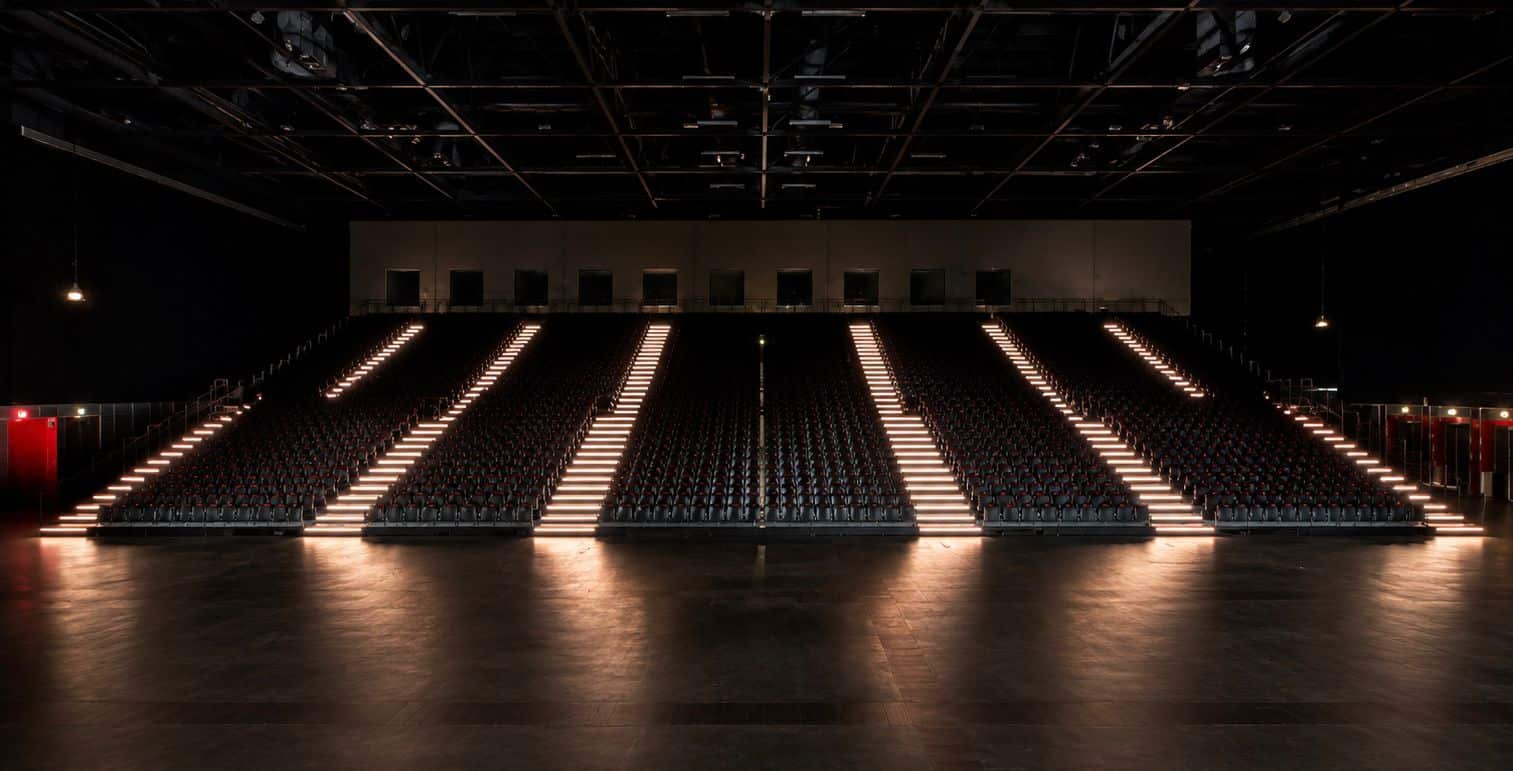
LED step lighting for the retractable grandstand at ÖVB Arena Bremen.
The retractable grandstand needed new step lighting while remaining fully operational when extending and retracting. We coordinated SL2 profiles, guided moving cables, plug-in connections and controls with the grandstand mechanics.
The lighting design must account for every grandstand movement.
Conventional fixed wiring could have restricted the mechanics or put unnecessary strain on cables. The upgrade therefore had to be planned as part of the moving grandstand from the outset.
The original lighting was removed and replaced with a project-specific LED system. Beyond the lighting effect, the decisive considerations were secure mechanical mounting, guided cable routes, plug-in transitions and detachable control equipment.
From original lighting to an integrated LED solution.
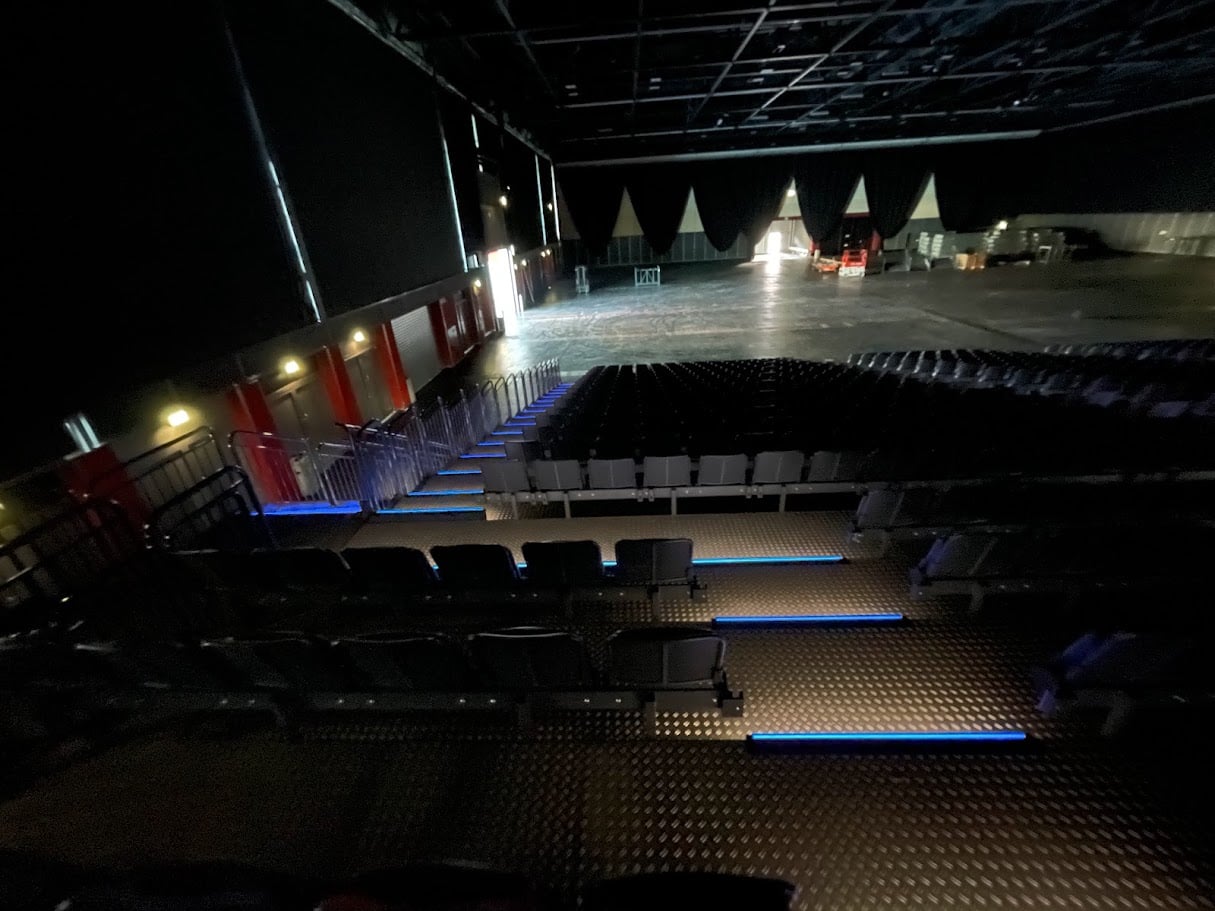
The new design fulfils two purposes: blue light clearly outlines the step edge, while a second lighting function directs white light down and forward onto the tread.
No existing profile channel: the metal steps had to be prepared.
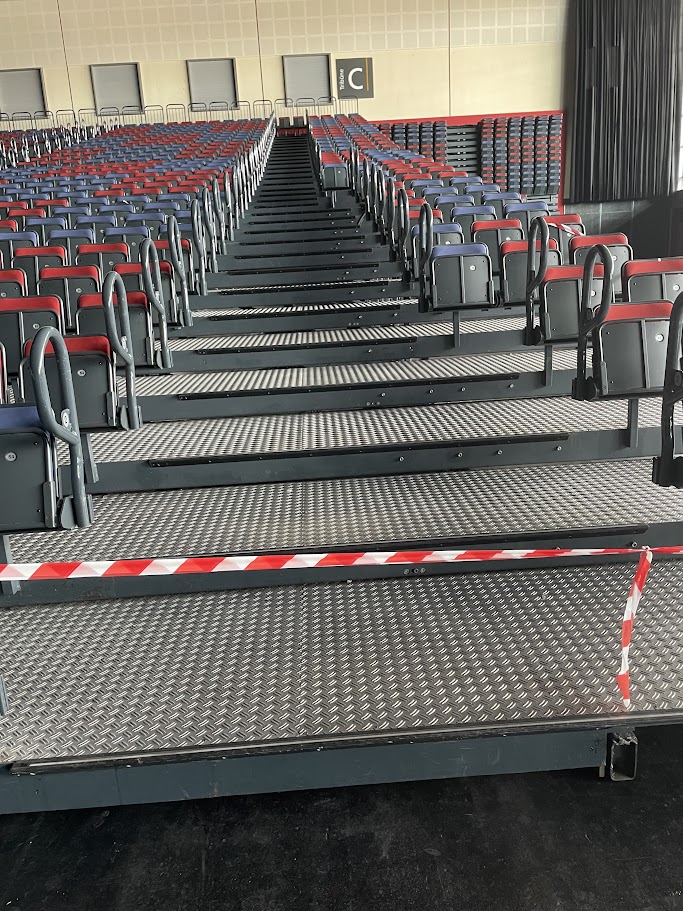
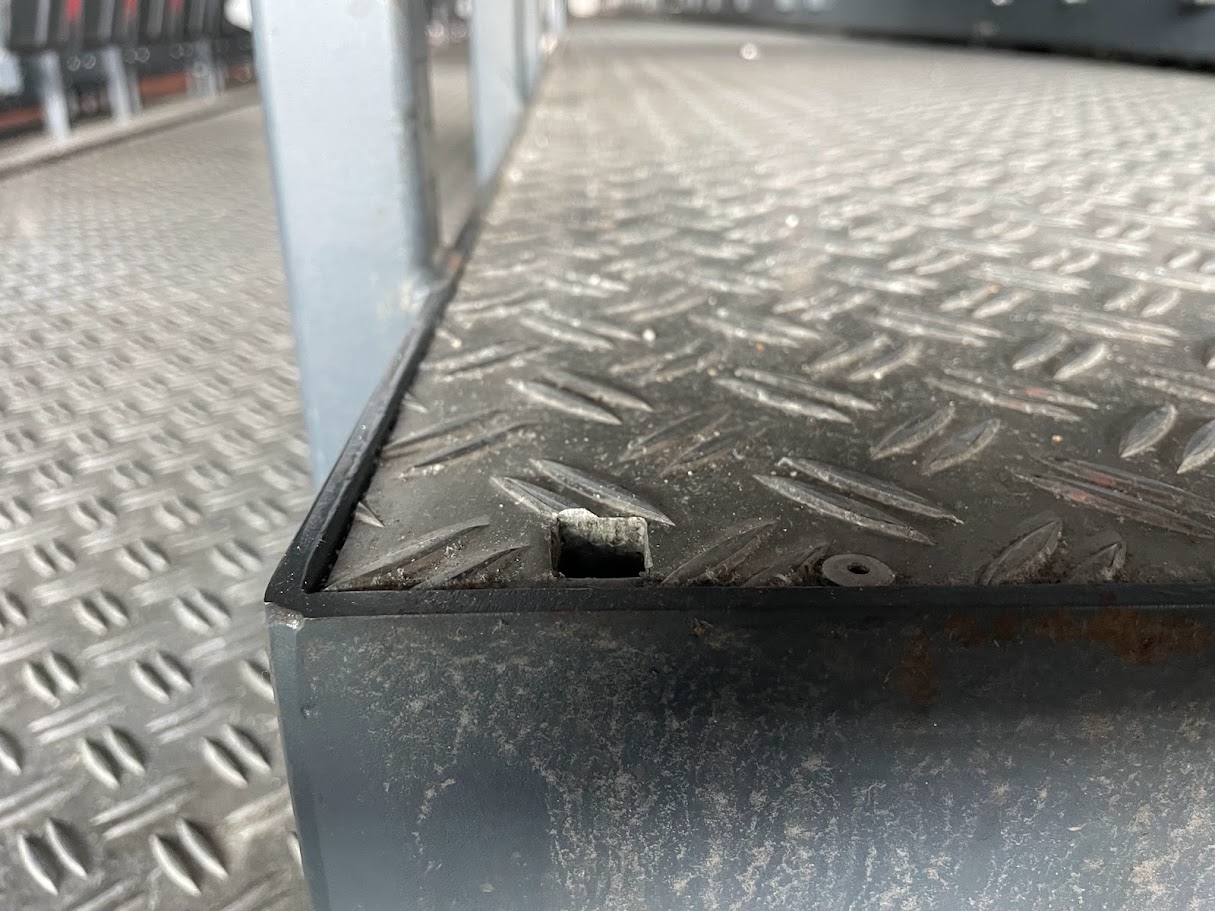
The steps and edges were entirely metal, with no suitable channel for the new SL2 profile.
Fixing points were therefore prepared to suit the project. Holes were drilled and tapped, and the profiles then screwed directly to the step edges, achieving a mechanically sound integration.

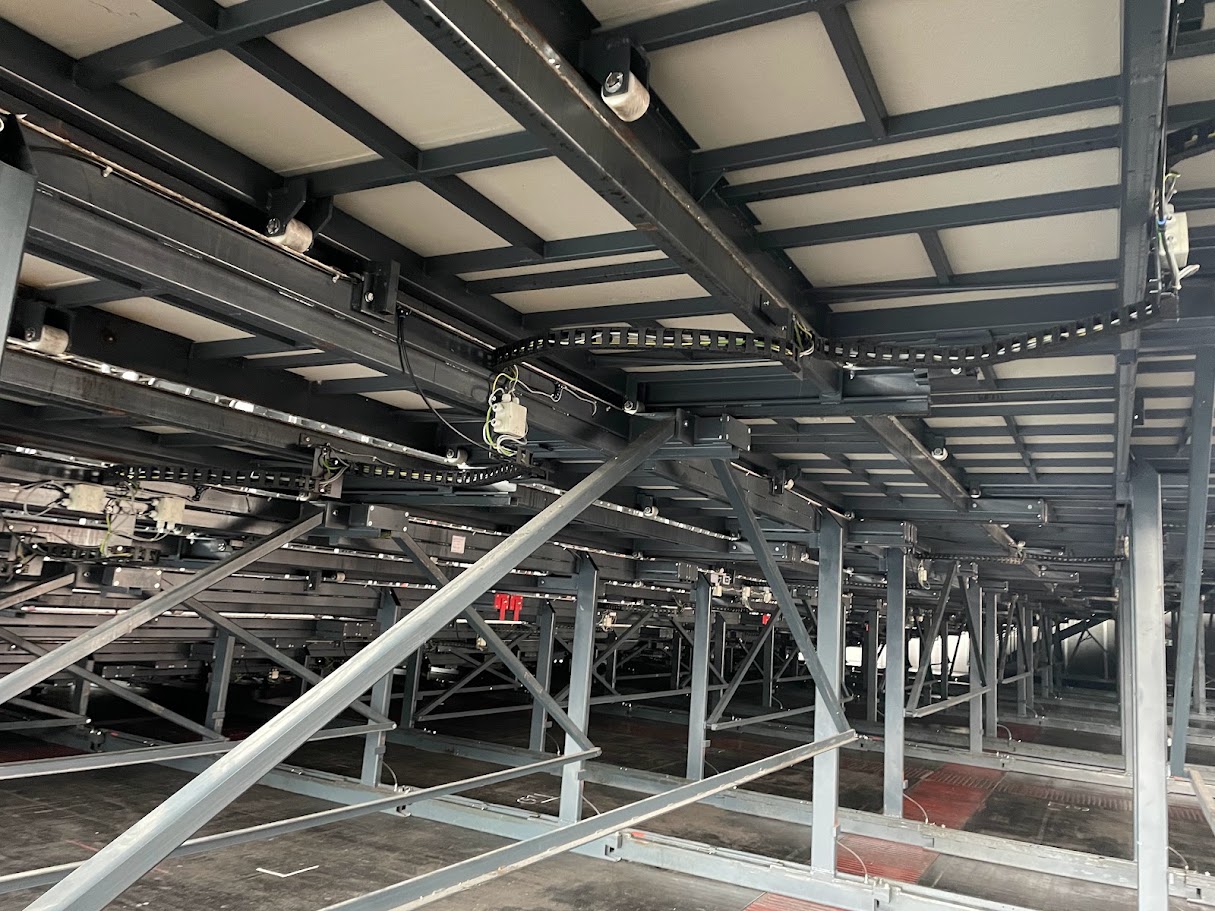
Cables designed to follow every grandstand movement.
Beneath the grandstand, cables run in cable carriers. This keeps their route defined as the structure extends or retracts and protects against tension, kinks and uncontrolled movement.
Detachable, plug-in and clearly organised.
The power supply and dimmer boxes are removed before the grandstand retracts. On reassembly, the same connections must be restored quickly and reliably.
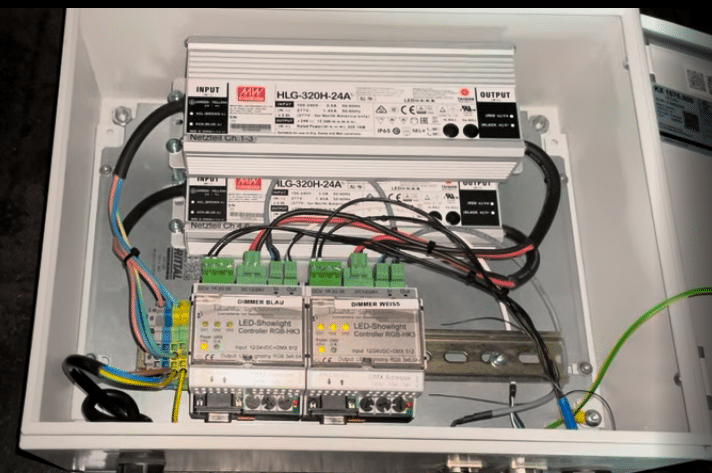

SL2: two lighting functions in one profile.
In Bremen, SL2 performs two distinct functions: an upper blue lighting zone marks the step edge, while a second zone projects white light forward and downward onto the tread.
The profile is only part of the story. Mounting, cabling, controls and grandstand movement had to be designed as one system.
What an effective retractable-grandstand installation requires.
The gallery shows not only the final lighting effect, but also the essential interfaces: profile installation, plug-in connectors, cable carriers, controls and the fully retracted position.
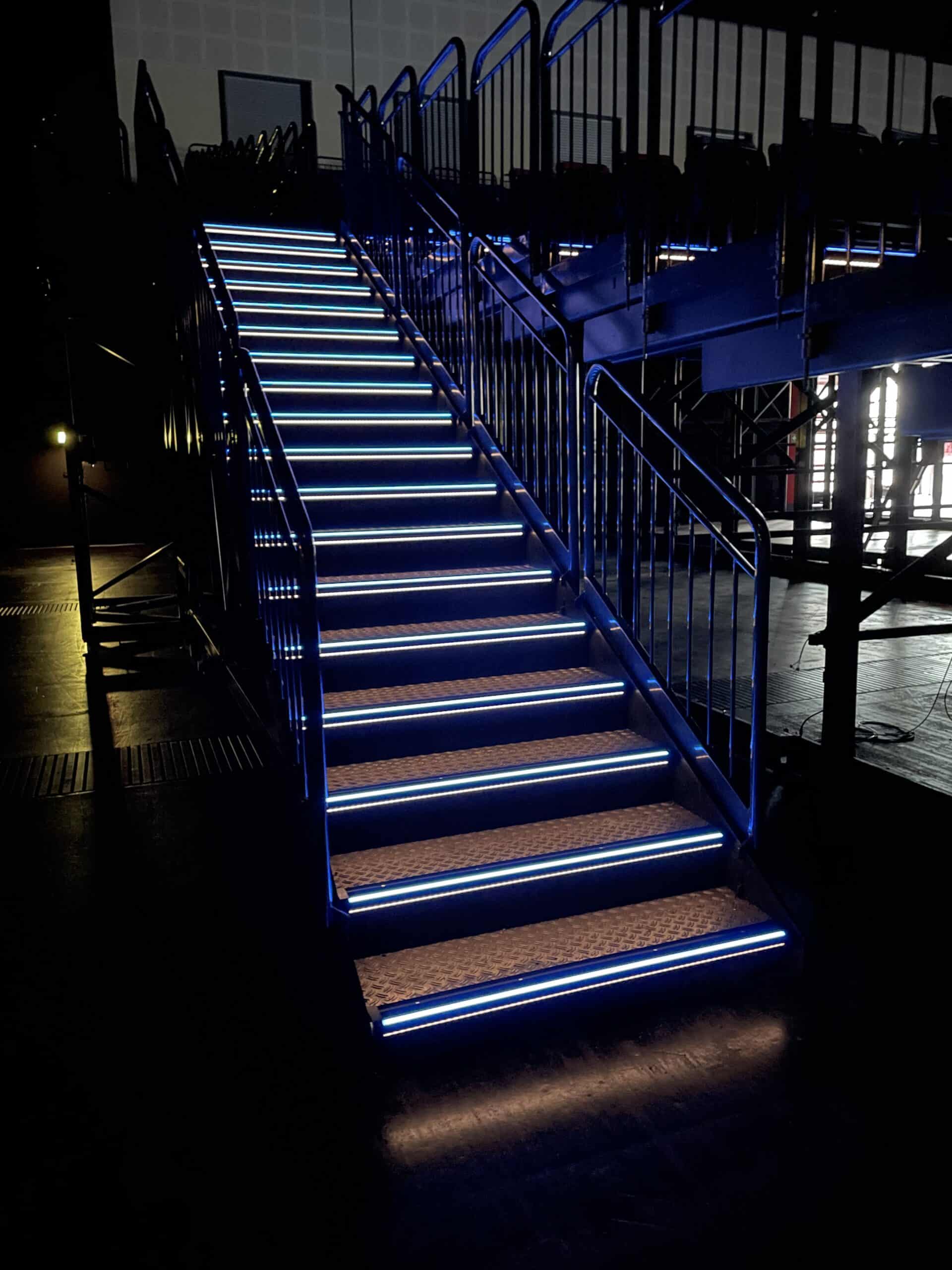
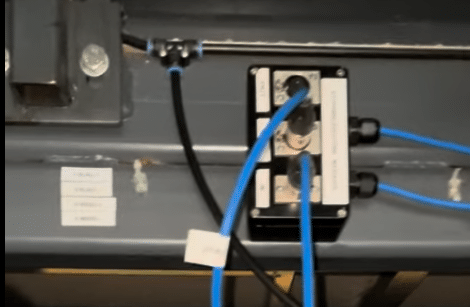
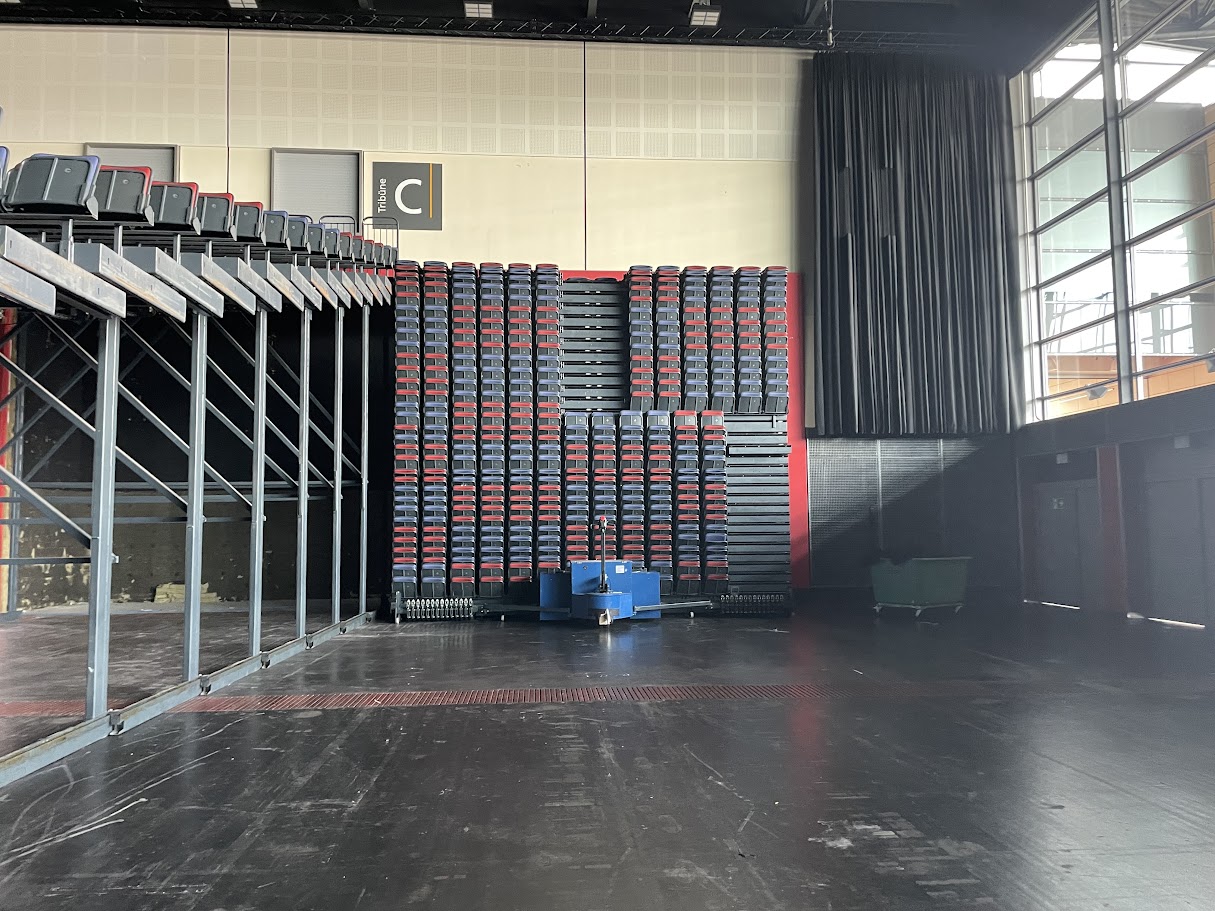
Lighting that works with the grandstand, not against it.
The new step lighting combines clear orientation with technical infrastructure designed around a moving grandstand. Profiles, cable carriers, plug-in connectors and removable controls operate as one coherent system.
For retractable grandstands, the light output is only one part of the requirement. The installation must withstand repeated movement, disconnection, reconnection and servicing. Those everyday operational needs shape the engineering solution.
Step lighting for retractable grandstands.
The right design depends on grandstand mechanics, existing cable routes and operational requirements.
Why were the cables installed in cable carriers?
The grandstand extends and retracts completely. Cable carriers guide the wiring along a defined path and protect against tension, kinks and uncontrolled movement.
How are the controls disconnected before retraction?
The control units are removable. Power is disconnected via PowerCON; compact metal enclosures with XLR connections are installed at the aisles.
Which step profile was used at ÖVB Arena?
The SL2 LED step profile was used. One lighting zone marks the edge in blue, while the second casts white light forward and downward onto the tread.
Can this design be adapted to other retractable or telescopic grandstands?
In principle, yes, but the design must be adapted to the specific mechanics. Mounting, movement paths, cable routing, disconnect points, controls and backup operation all need consideration.
A photo of the structure is enough for an initial assessment.
Show us the aisles, direction of movement and existing equipment. We will tell you what else is needed to evaluate a suitable step-lighting system.